
A lot of people worried about break-ins start by buying a fancier lock. That's not a bad idea, but it's usually not the weakest part of the door.
When a door gets kicked in, the lock almost always survives. What breaks is the thin strip of wood around it. The deadbolt stays locked and simply rips through the door frame, taking the strike plate with it.
If you want a door that holds, you have to strengthen the whole system: the frame, the hinges, the lock and the door itself. Here's how we approach it for homeowners around Sacramento, roughly in order of bang for your buck.
Why most front doors are weaker than they look
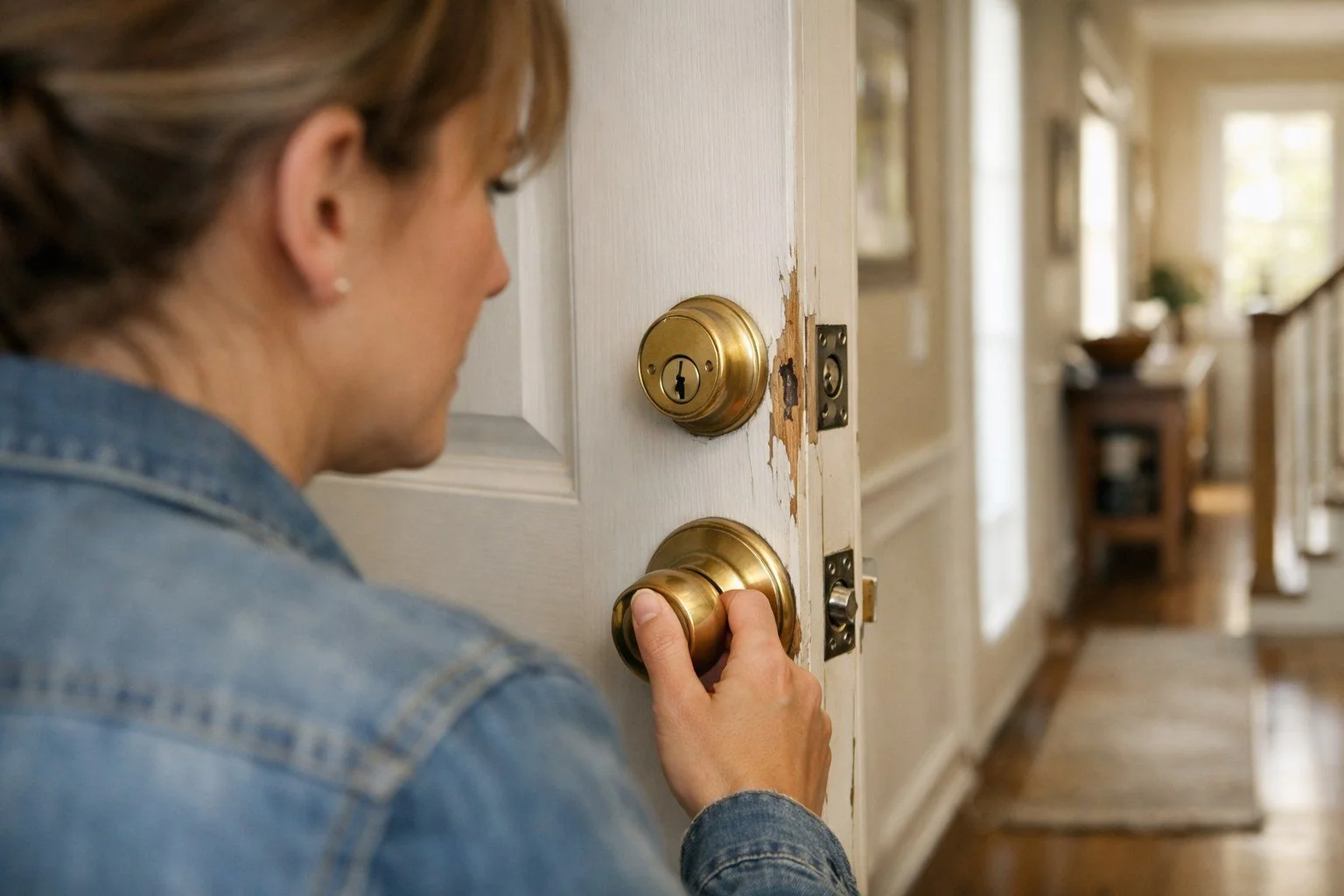
On a typical builder-grade door:
The strike plate (the metal plate on the frame the deadbolt slides into) is held on with two short screws, often about 3/4" long.
Those screws only reach the door jamb, a thin piece of trim, not the solid wall framing behind it.
The hinges are attached the same way, with short screws into the jamb.
So the strongest part of the door, the deadbolt, is anchored into the weakest part, a thin board held in with short screws. A few hard kicks and the jamb splits.
1. Use 3" screws in the strike plate and hinges
This is the cheapest upgrade there is and it makes a real difference. Replacing the short strike plate and hinge screws with 3" screws lets them pass through the jamb and bite into the wall stud behind it. Now a kick has to break the framing, not just a strip of trim.
Use at least one long screw in each hinge, ideally the one closest to the weather stripping. Go easy when you tighten them: overdriving a hinge screw can pull the frame out of square and make the door rub.
2. Install a door frame reinforcement kit
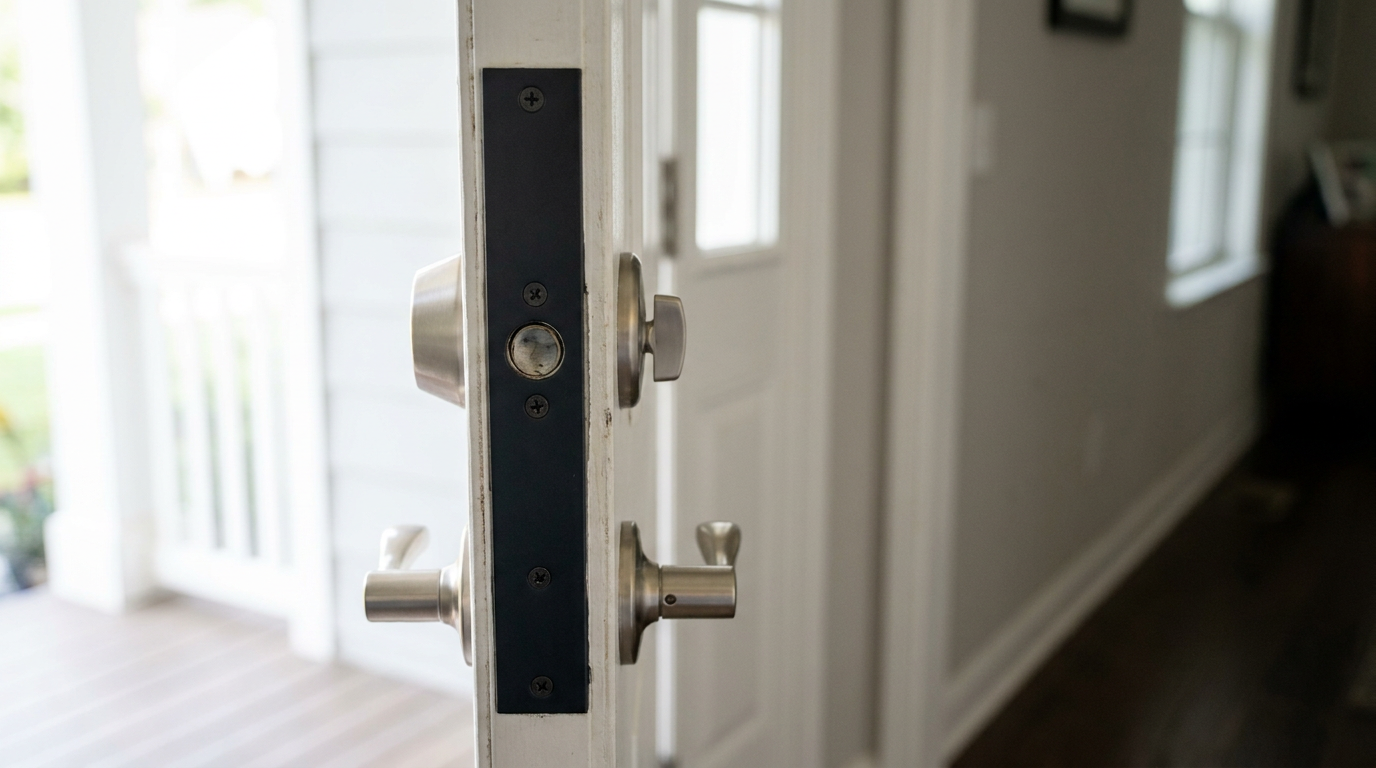
A reinforcement kit adds a long steel plate along the frame on the lock side, often several feet tall, anchored into the framing with long screws. Instead of the force of a kick landing on one small spot around the strike plate, it gets spread across the whole plate and into the wall.
Many kits also include:
A door wrap, a metal plate that wraps around the edge of the door at the lock, so the door itself doesn't split around the deadbolt hole
Hinge reinforcement plates for the hinge side
Once it's painted to match, most people can't tell it's there. This is the single biggest upgrade for a door that's been kicked before or a home in a neighborhood that's had trouble.
3. Upgrade to a Grade 1 deadbolt with a full 1" throw
Deadbolts are rated Grade 1, 2 or 3, with Grade 1 being the strongest residential rating. Look for:
Grade 1 rating
A 1" bolt throw, so the bolt reaches deep into the frame
A hardened steel bolt and solid metal construction
A cylinder with security pins or a restricted keyway if picking and bumping worry you. (We showed how easy a standard lock is to pick in this video post.)
After the lock goes in, make sure the bolt goes all the way out when the door is closed. If you have to push the door to lock it, the bolt probably isn't fully extending, and you're not getting the strength you paid for.
4. Make sure the door itself is solid
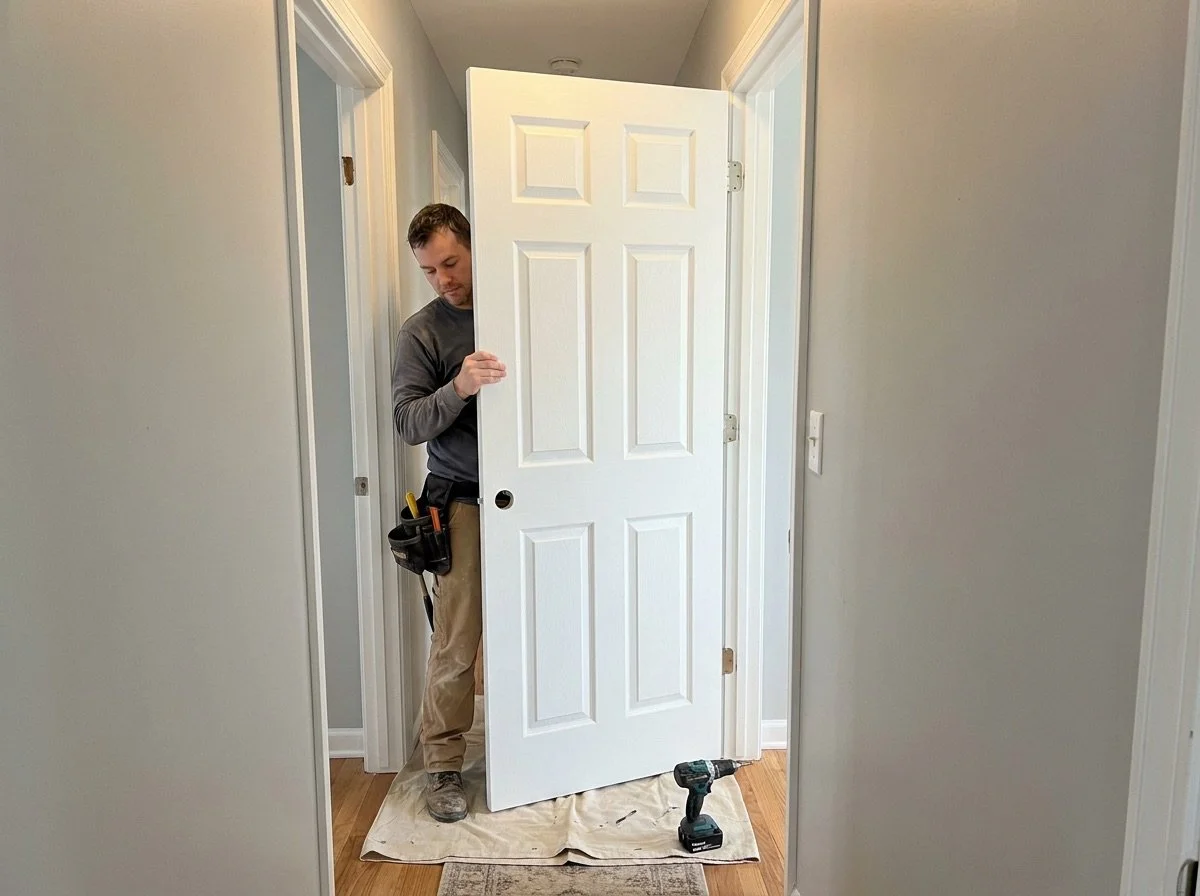
An exterior door should be solid wood, solid core, steel or fiberglass. If you knock on it and it sounds hollow, it may be an interior-style hollow-core door, and no lock will make it secure. Replacing it is usually the right move.
Glass panels or sidelights near the lock are another weak spot: someone can break the glass and reach in to turn the thumb turn. Security film on the glass helps. We generally don't recommend double-cylinder deadbolts (the kind that need a key on the inside), because they can slow down your family getting out in a fire.
5. Add a steel security screen door
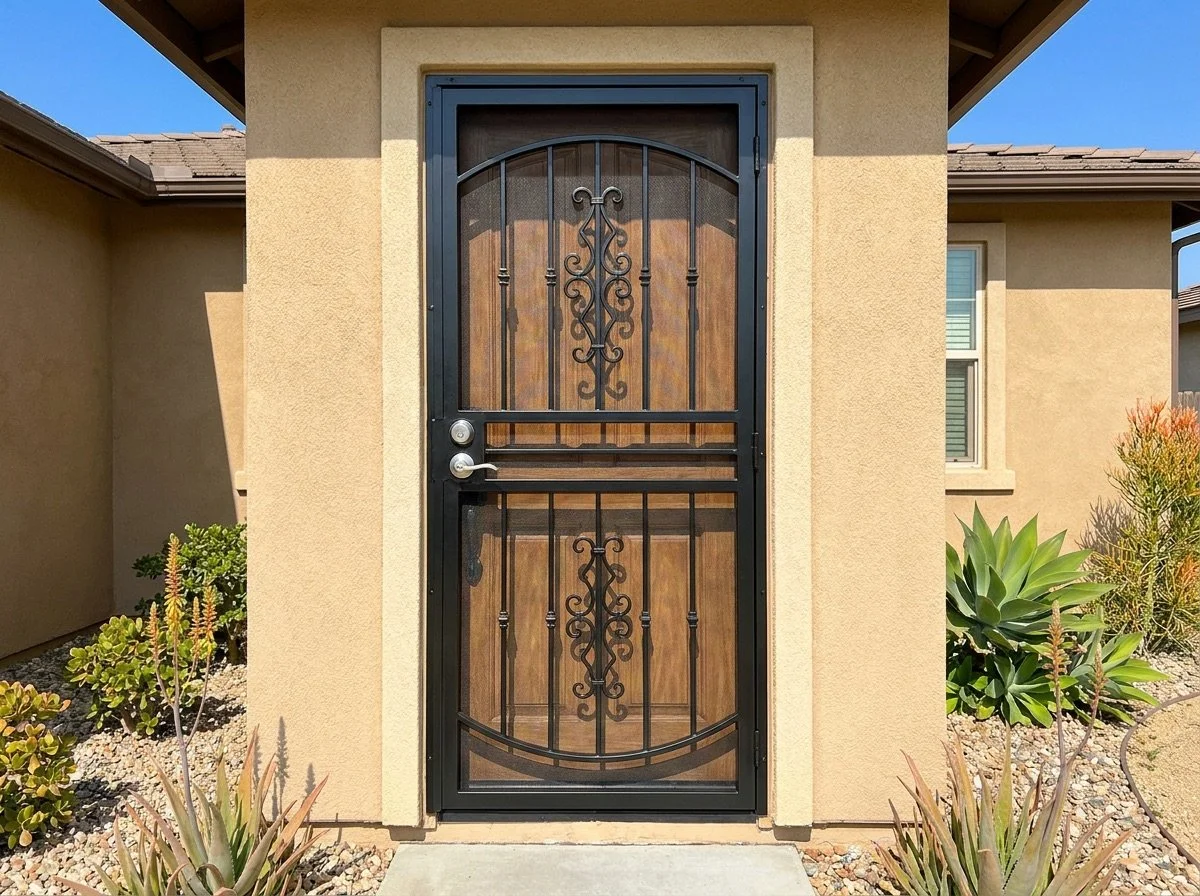
Security screen doors are a perfect fit for Sacramento. In the summer you can leave the front or back door open for airflow and still have a locked steel door between you and the street. When the main door is closed, it's a second layer someone has to get through first.
What to look for:
A heavy-gauge steel frame, not aluminum
Tamper-resistant hinges that can't be popped out from the outside
A real deadbolt, ideally keyed to match your other locks
A steel mesh or tight bar pattern so nobody can reach through to the lock
Professional installation with a solid mounting into the framing. A strong door on a weak mount is still a weak door.
They also do a lot for peace of mind when someone knocks: you can open the main door and talk through a locked steel screen.
Other doors and easy wins
Sliding glass doors: a security bar or a dowel in the track stops them from being forced open, and anti-lift blocks or screws in the top track keep the panel from being lifted off.
Garage entry door: treat it like a front door. If someone gets into the garage, this is the only thing between them and the house.
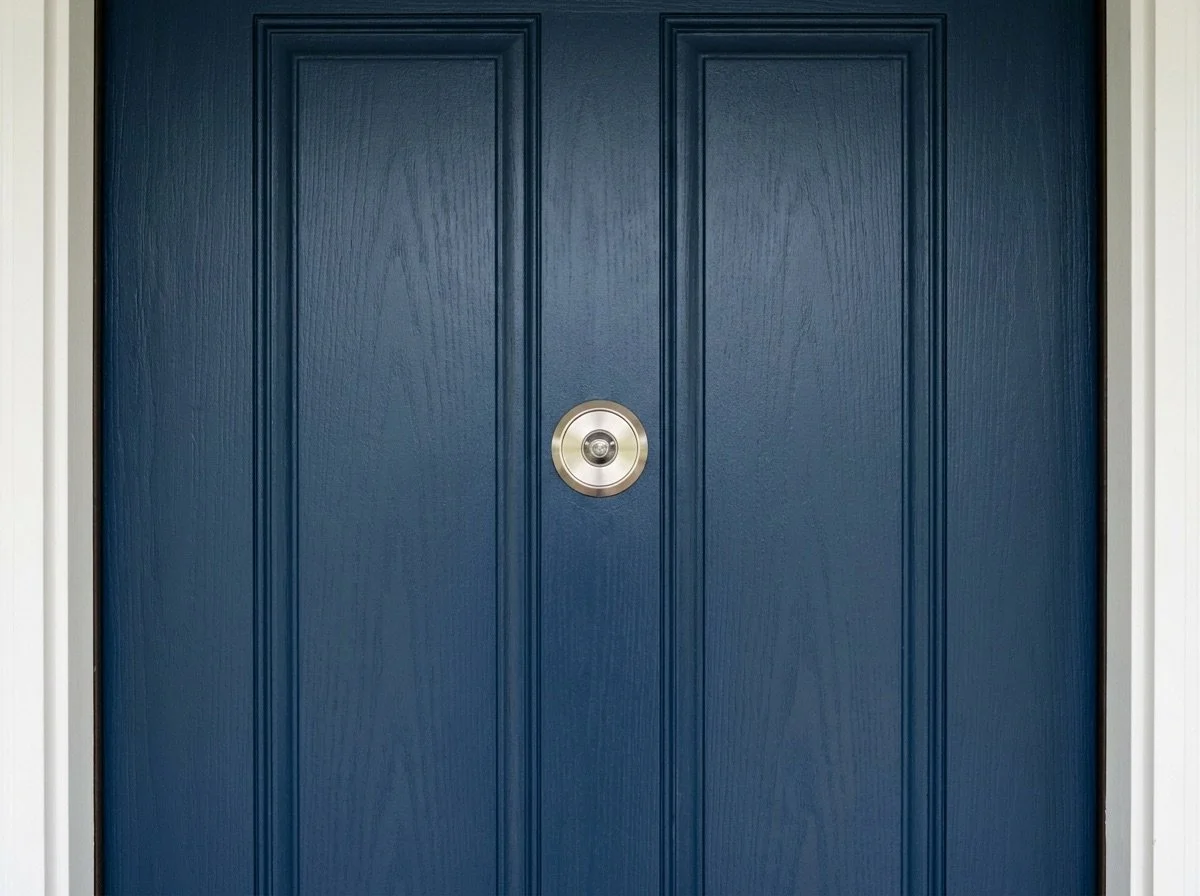
Peephole or video doorbell: know who's there before you open up.
Lighting: a motion light over each entry is cheap and makes a door a lot less inviting at night.
Door that won't latch: if you have to slam the door or lift it to lock it, get it adjusted. A misaligned door is a weak door.
A simple plan
Long screws in the strike and hinges (do it this weekend)
Reinforcement kit on the front door and garage entry door
Grade 1 deadbolts, keyed alike
A steel security screen door on the entries you use most
Let's make your door harder to get through
QuickTurn reinforces door frames, installs Grade 1 deadbolts, hangs replacement doors and installs steel security screen doors for homeowners across the Sacramento area. We'll look at your doors, tell you where the weak points are, and recommend what's actually worth doing.
Request a door security upgrade, or call us at (916) 573-9859.
