
When you leave your house and lock the door, you probably assume you're safe. But how safe is that lock, really? Could somebody pick it?
We filmed a quick demo on the most common lock in America to find out. Here's exactly how it's done, step by step, and what it means for your home here in Sacramento.
A quick note before we start: Only pick locks you own or have written permission to work on. In California, having lock picks with the intent to break in is a crime (Penal Code 466). This guide is to show homeowners how their locks work, and why it may be time to upgrade them.
The Lock on Most Homes in America
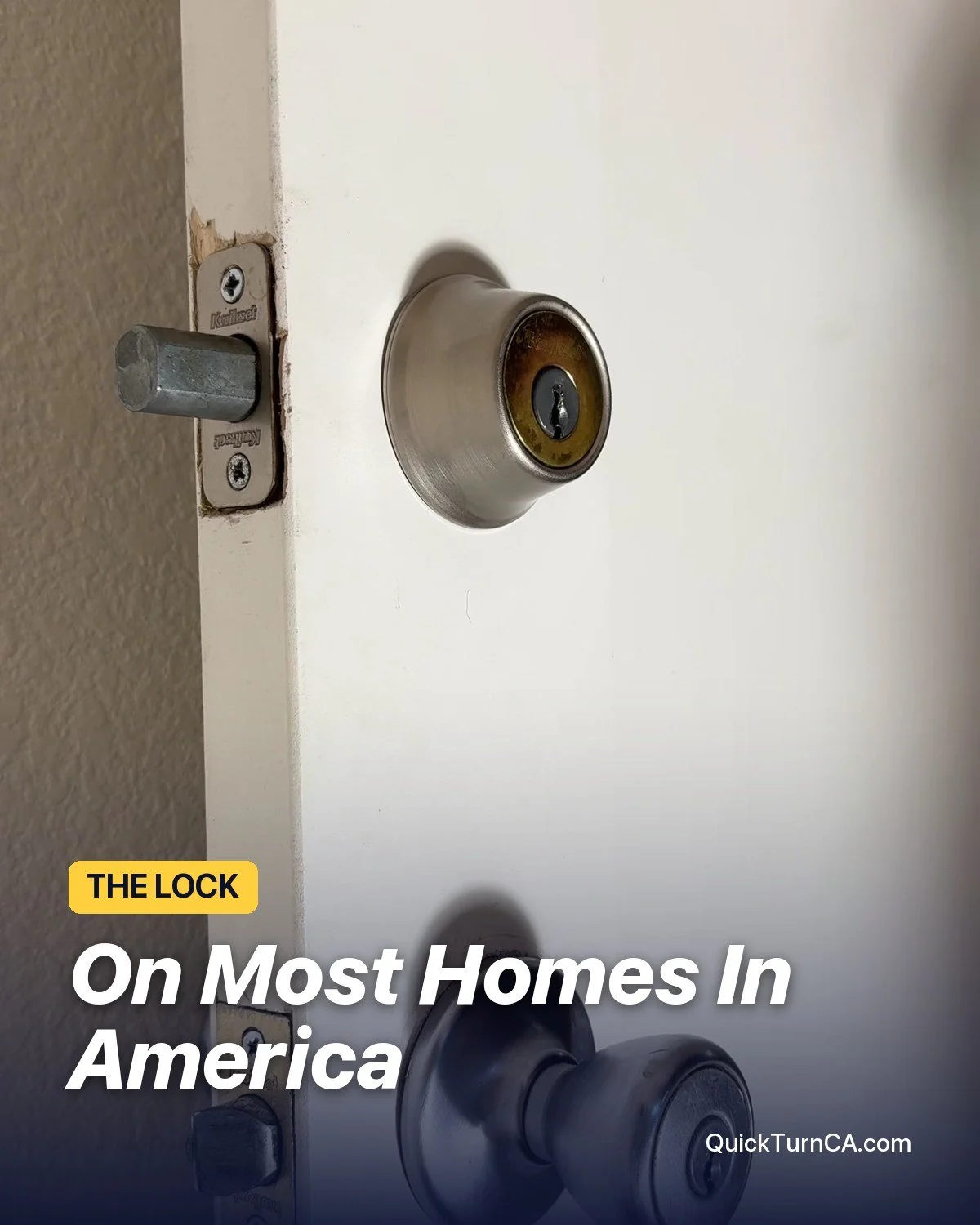
This is the Kwikset KW1 keyway. It's on the deadbolt and doorknob of most residential properties in the country. If your house came with "builder-grade" locks, there's a good chance this is what's on your front door right now.
Inside is a basic pin tumbler design. A row of small spring-loaded pins blocks the cylinder from turning. The right key lifts every pin to exactly the right height (called the shear line), and the cylinder turns. Lock picking simply means lifting those pins to the shear line without the key.
The Old-School Way: Hook Pick + Tension Wrench
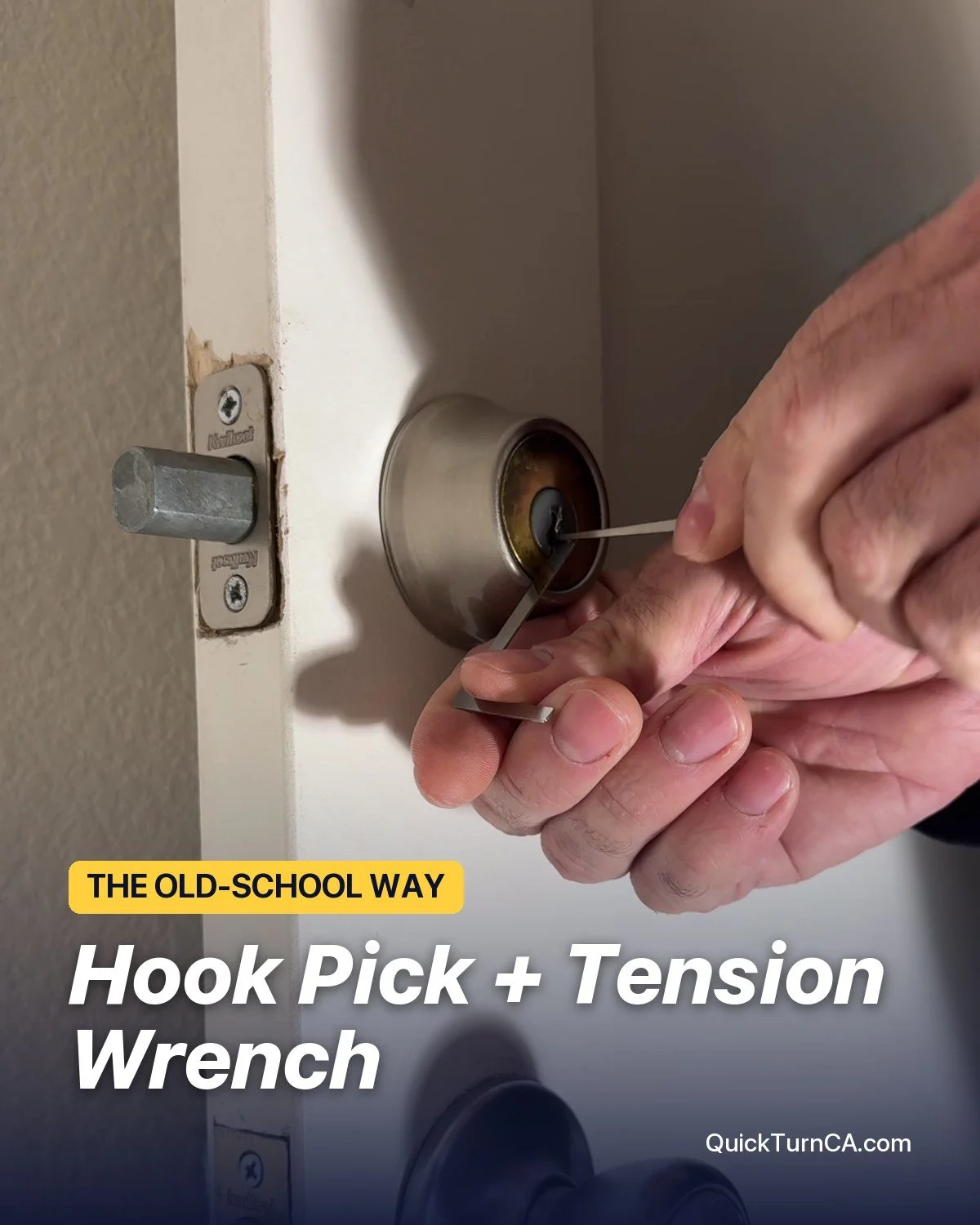
The classic method uses two tools:
A tension wrench, placed in the keyway to apply light turning pressure
A hook pick, used to push up the pins one at a time
Honestly, if someone tries to pick this lock this way, it's pretty hard. It takes practice, a feel for the pins, and patience. Most people would give up.
The problem is that there's a much easier way.
The Tool: Lishi KW1 2-in-1 Pick
The Lishi KW1 2-in-1 is a professional locksmith tool made for this exact keyway. It combines the tension wrench and the pick in one, and it's numbered so you know exactly which pin you're working on. With it, the lock can be picked much more easily.
Step 1: Insert the Tool
Slide the Lishi into the keyway the same way a key would go in, until the tool's stop rests against the face of the lock.
Step 2: Apply Light Tension
Keep slight pressure, turning the tool the same way the key turns to unlock. This keeps the lock engaged, so each pin stays put once you set it.
The key word is slight. Too much pressure and the pins jam; too little and they drop back down.
Step 3: Pick Each Pin
While holding tension, use the pick lever to move to each pin position and gently lift. When a pin reaches the shear line you'll feel a tiny click or a slight give in the cylinder. Then move on to the next one. Pick each pin...
Step 4: Turn It. Unlocked.
...and once the last pin sets, the cylinder turns and the bolt slides back. Boom, it's unlocked.
Bonus: Same Trick on the Doorknob
You can do the same thing on the doorknob. It uses the same KW1 keyway, so the same tool and the same steps work.
Turn the knob, and the door is open.
What This Means for Your Home
The Kwikset KW1 is on most residential properties in America, and as you just saw, it isn't hard to defeat with the right tool. That doesn't mean everyone is a target. But if your locks are the same ones the builder installed, it's worth knowing what's protecting your family.
Ways to make your door harder to get through:
Upgrade to a high-security deadbolt. Look for cylinders with security pins, sidebars, or restricted keyways that resist picking and bumping.
Choose a Grade 1 deadbolt. It's the strongest residential rating, built to stand up to kicking and prying, not just picking.
Consider a smart lock. Keypad and app-based locks let you control who gets in, see when the door is used, and change access codes in seconds.
Rekey when you move in. Rekeying won't make a lock harder to pick, but it does make sure old keys from previous owners, contractors, or tenants no longer work.
Sacramento: Let's Make Your Locks Harder to Pick
QuickTurn installs and upgrades locks for homeowners and property managers across the Sacramento area. Whether you want a high-security deadbolt, a smart lock, or a full rekey after a move, we'll recommend the right fit for your door.
