
How Smart Sacramento Landlords Protect Their Investment at Every Stage of a Tenancy
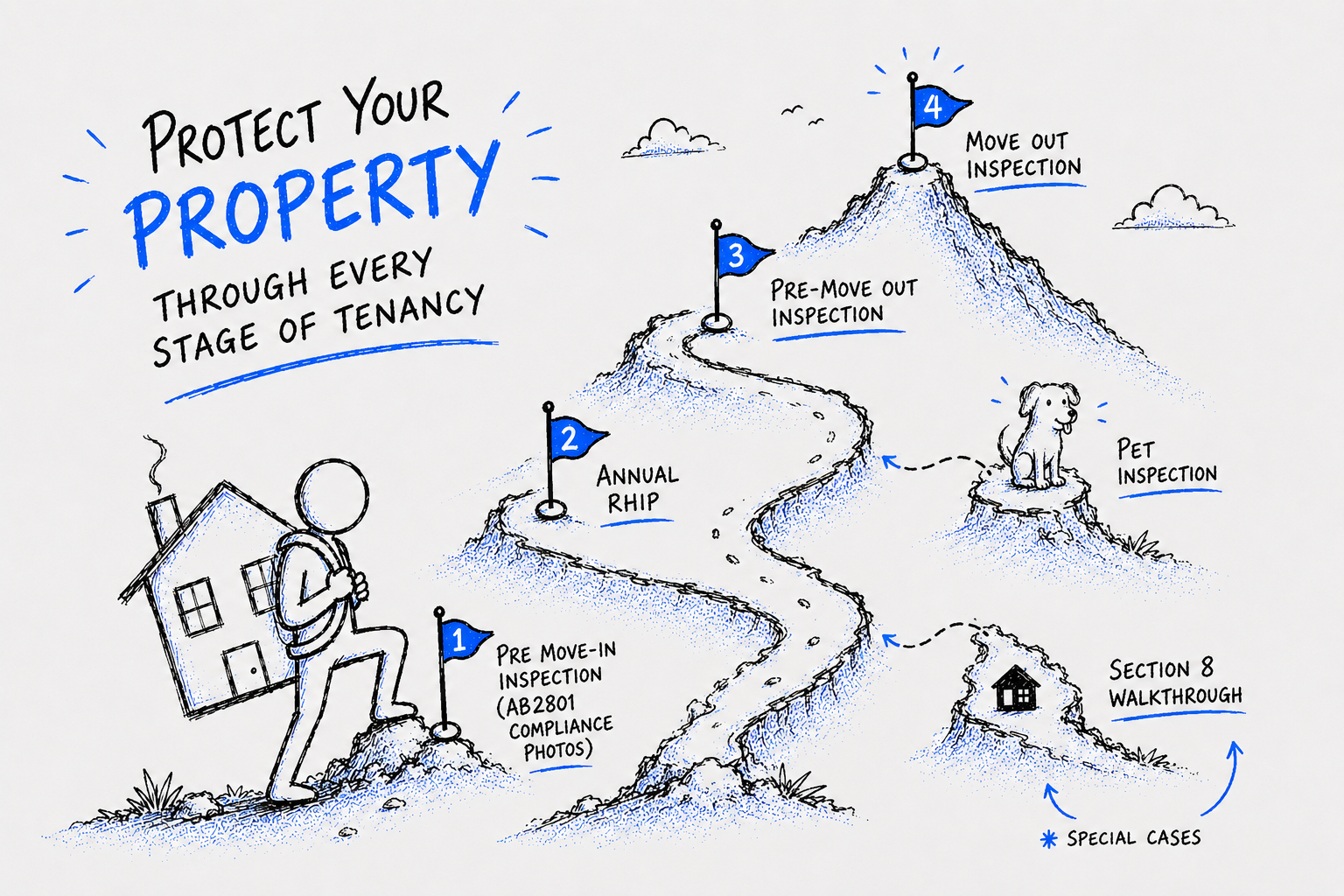
Not all property inspections are the same. Some are required by law. Some protect you at the end of a tenancy. Some exist to catch problems before they become expensive. Knowing which type of inspection to use, and when, is one of the most practical things a landlord or property manager can do.
Here's a breakdown of every type of inspection that matters, and why each one earns its place in a well-run portfolio.
1. Annual RHIP Inspection
When to use it: Once per year, for every occupied rental unit in Sacramento.
Sacramento's Rental Housing Inspection Program (RHIP) requires landlords to inspect the interior and exterior of every rental unit at the start of each tenancy and annually after that. The inspection follows an official checklist and has to be documented. Skip it and you're out of compliance, which creates liability and audit risk with the County.
Beyond the legal requirement, the RHIP inspection is genuinely useful. It covers safety systems, structural issues, and habitability conditions, and it forces a regular look at the property while it's occupied. A lot of deferred maintenance gets caught here that would otherwise show up as a nasty surprise at move-out.
2. AB 2801 Initial Photo Documentation
When to use it: Before a new tenant moves in, and before any security deposit deductions are made.
California's AB 2801 (effective 2024) changed the rules on security deposits. To legally charge a tenant for damage at move-out, you now need timestamped photo documentation of the unit's condition before they moved in. Without it, your deductions can be challenged.
This initial photo survey establishes your baseline. Every room, every fixture, documented and on file. It also covers smoke and CO detector testing, which Sacramento requires anyway. Think of it as the foundation every other inspection builds on.
3. Pet Inspection
When to use it: Once or twice per year for any unit with a pet-approved tenant.
Tenants with pets tend to stay longer, which is good. But pets also cause specific kinds of damage: floors, baseboards, doors, carpets, and odors that can be expensive to remediate if they go unaddressed for years. A targeted pet inspection catches those issues early, while they're still manageable.
Done right, pet inspections don't create friction. They're focused and professional, and most tenants appreciate knowing that small issues will get addressed rather than billed to them all at once at move-out. Scheduling them in batches, twice a year at consistent intervals, keeps the process efficient.

4. Section 8 Pre-Inspection Walkthrough
When to use it: Before any scheduled HUD or Housing Authority inspection.
This one has a clear financial argument. If a Section 8 property fails its official inspection, the owner doesn't get paid that month. Then you need to make all the required repairs and schedule a reinspection before payment resumes. That's real money sitting on the table.
A pre-inspection walkthrough identifies what's likely to fail before the inspector shows up. You get a written list of items to address, prioritized so repairs happen in the right order. One visit beforehand can prevent weeks of delayed rent.
5. Pre-Move-Out Walkthrough
When to use it: Within two weeks of a tenant's move-out date.
California law actually requires landlords to offer this. When a tenant gives notice, you're obligated to offer them a pre-move-out inspection within a two-week window before they leave. The goal is to give them a chance to fix things before they go, rather than discovering issues after the fact.
We walk the unit with the tenant, go through a cleaning checklist item by item, show them specifically what needs to be addressed, and document everything in writing. The tenant initials each item and signs the form. They get a copy and have seven days to make corrections.
This inspection is not punitive. It's designed to help the tenant get their deposit back, which is a much smoother outcome for everyone. Clear expectations early prevent disputes later.
6. Final Move-Out Inspection
When to use it: After the tenant has vacated.
Once the tenant is out, you need a clear picture of what's been left behind. This inspection documents the property's condition after move-out, compares it against the AB 2801 baseline photos, and gives your property manager everything they need to process the security deposit accurately.
Tenants cannot be present during the final move-out inspection. Everything is photographed, noted in writing, and organized so that any deductions are clearly documented and defensible.
Putting It All Together
The inspections that protect you most aren't one-offs. They work as a system.
The AB 2801 photo survey gives you a baseline. Annual RHIP inspections keep you compliant and catch problems while the tenancy is active. Pet inspections protect against specific damage before it compounds. Section 8 pre-inspections keep your income stream uninterrupted. And the pre-move-out and final move-out inspections close the loop, protecting the deposit process at the end of every tenancy.
Running a rental property without regular inspections is the most expensive way to do it. You find out about everything late, with limited options and full costs.
QuickTurn Maintenance offers all of these inspection services for property managers and owners throughout Sacramento. We're CAA-certified, licensed (Contractor #1152617), and AppFolio-fluent. Reach out to talk about setting up an inspection schedule for your portfolio.
