
Extinguishers, Detectors, and Clutter: The On-Site Hazards Sacramento Fire Inspectors Flag Most
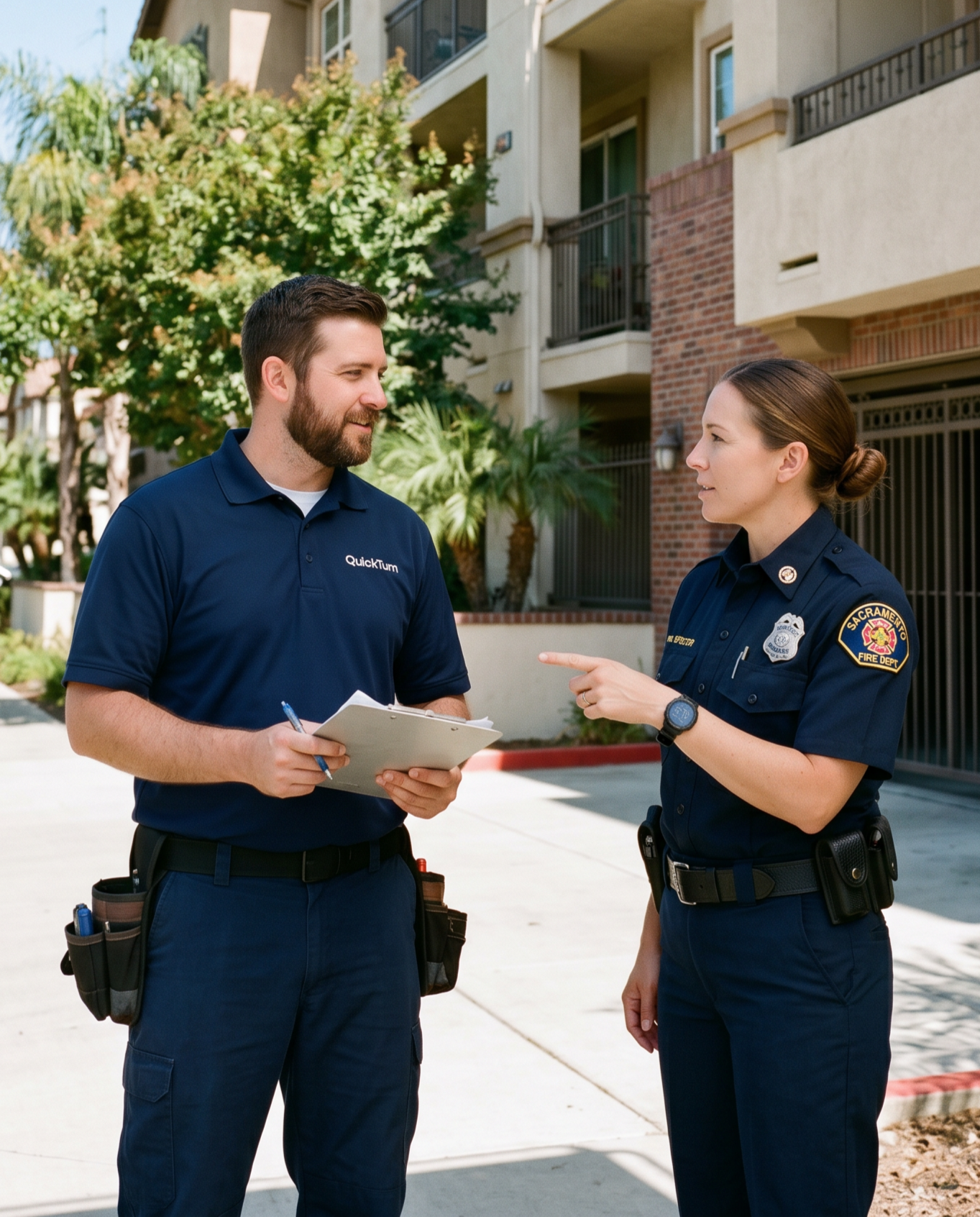
In a companion post, "How Fire Inspectors Get In," we covered the biggest category of fire code corrections we run into: getting responders into the building through Knox boxes, working keys, and keyed lock overrides. This post covers the other half of the job, the life-safety equipment and on-site hazards inspectors flag once they're inside.
QuickTurn Maintenance has completed dozens of these fire code inspections and corrections alongside fire inspectors on behalf of Sacramento property managers. The items below came up over and over, so if you own or manage rentals here, this is a useful checklist of what an inspector is likely to write up.
Fire Extinguishers
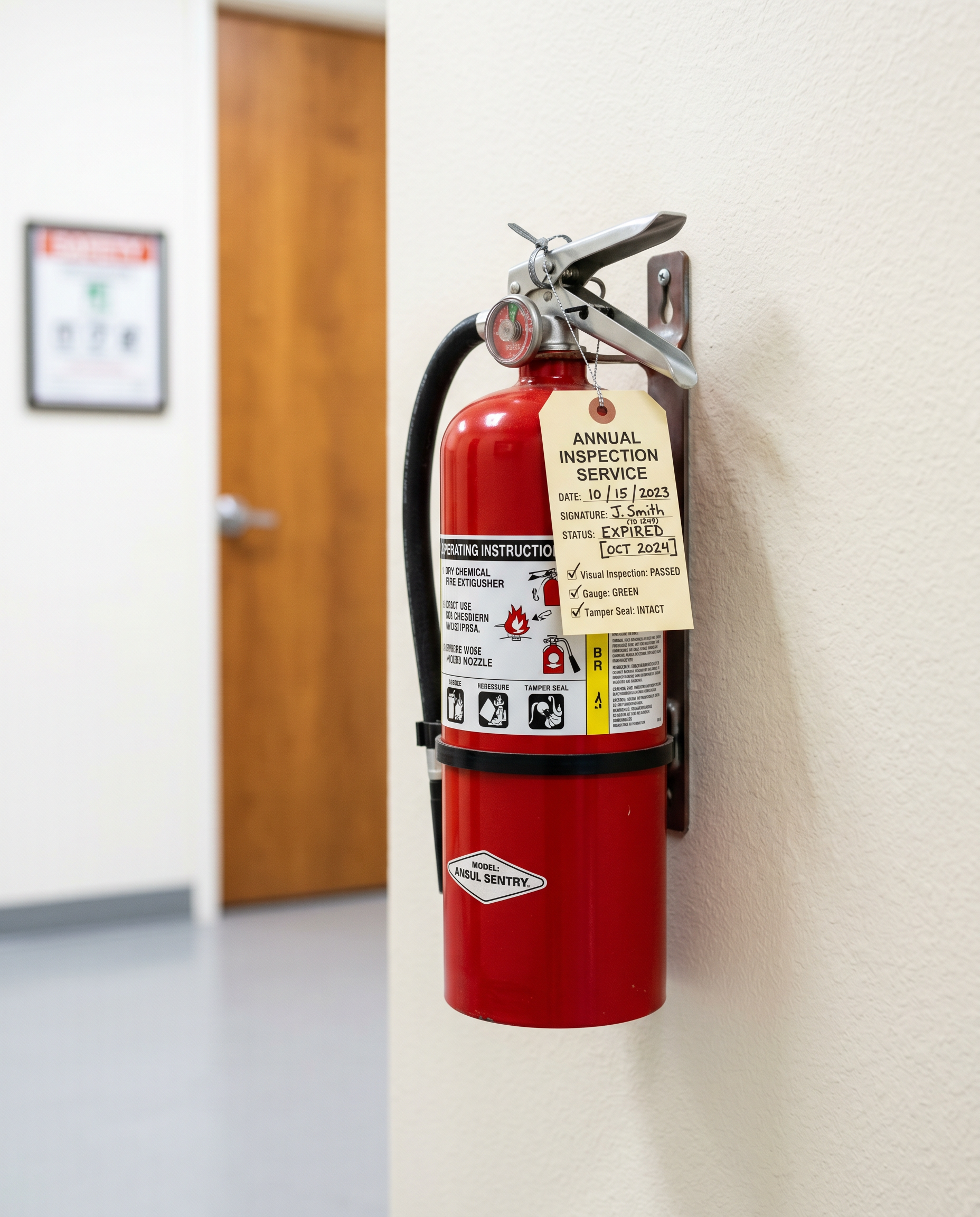
After access, extinguishers are the most common correction we handle. The flags fall into a few buckets:
Expired or unserviced. Extinguishers need a current annual service tag. A lot of the ones we found were out of date or had never been tagged.
Not mounted correctly. Inspectors want extinguishers properly mounted, often on a bracket or beam, not sitting on the floor.
Not enough coverage. Some buildings needed an extinguisher added per floor, per unit, or along a wood staircase.
How we fix it: We service or replace expired units, mount them correctly, and add extinguishers where coverage is short so the count matches what the code requires for the building.
Smoke and CO Detectors, Plus the Declaration
Detectors are a required item on nearly every inspection, and the paperwork behind them is easy to miss. We regularly handled three related tasks:
Missing detectors. Installing smoke detectors where they were absent, including laundry rooms and each landing of interior stairwells.
Failing or chirping units. Replacing dead CO detectors and swapping batteries.
The detector declaration. Sacramento inspections require a signed declaration confirming working smoke and CO detectors. This came up on almost every mandated inspection, and it's a step property managers frequently overlook.
How we fix it: We install and test the detectors, then complete the detector declaration so the compliance record is closed out, not just the physical work.
Combustibles and Housekeeping Near Heat Sources
This one surprises people, but it's a frequent flag. Inspectors look hard at what's stored near anything that generates heat.
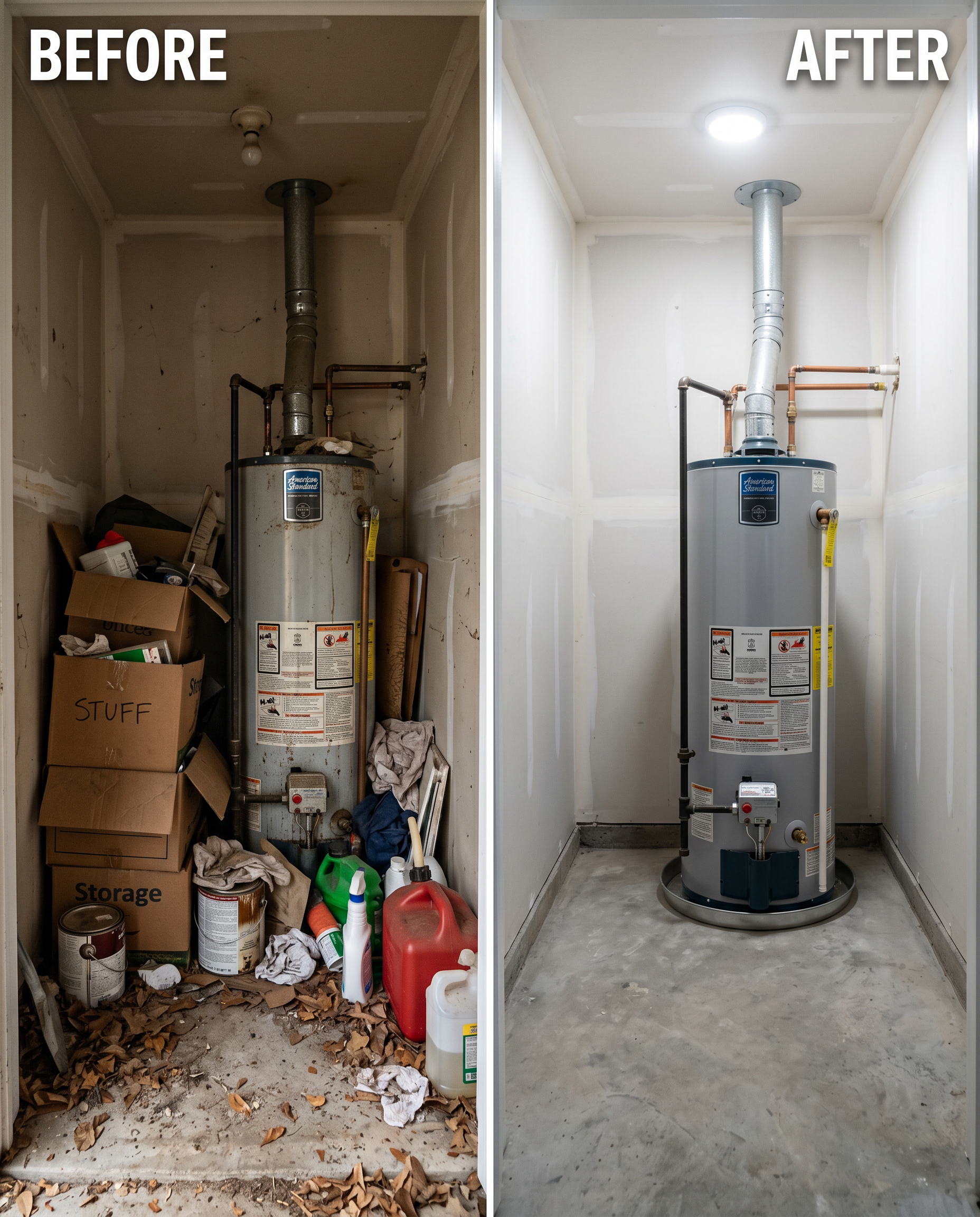
Common write-ups included flammables stored next to water heaters, leaves and debris piled in water heater and utility rooms, dryer lint building up in laundry rooms, plants crowding an extinguisher, and general junk blocking a utility area.
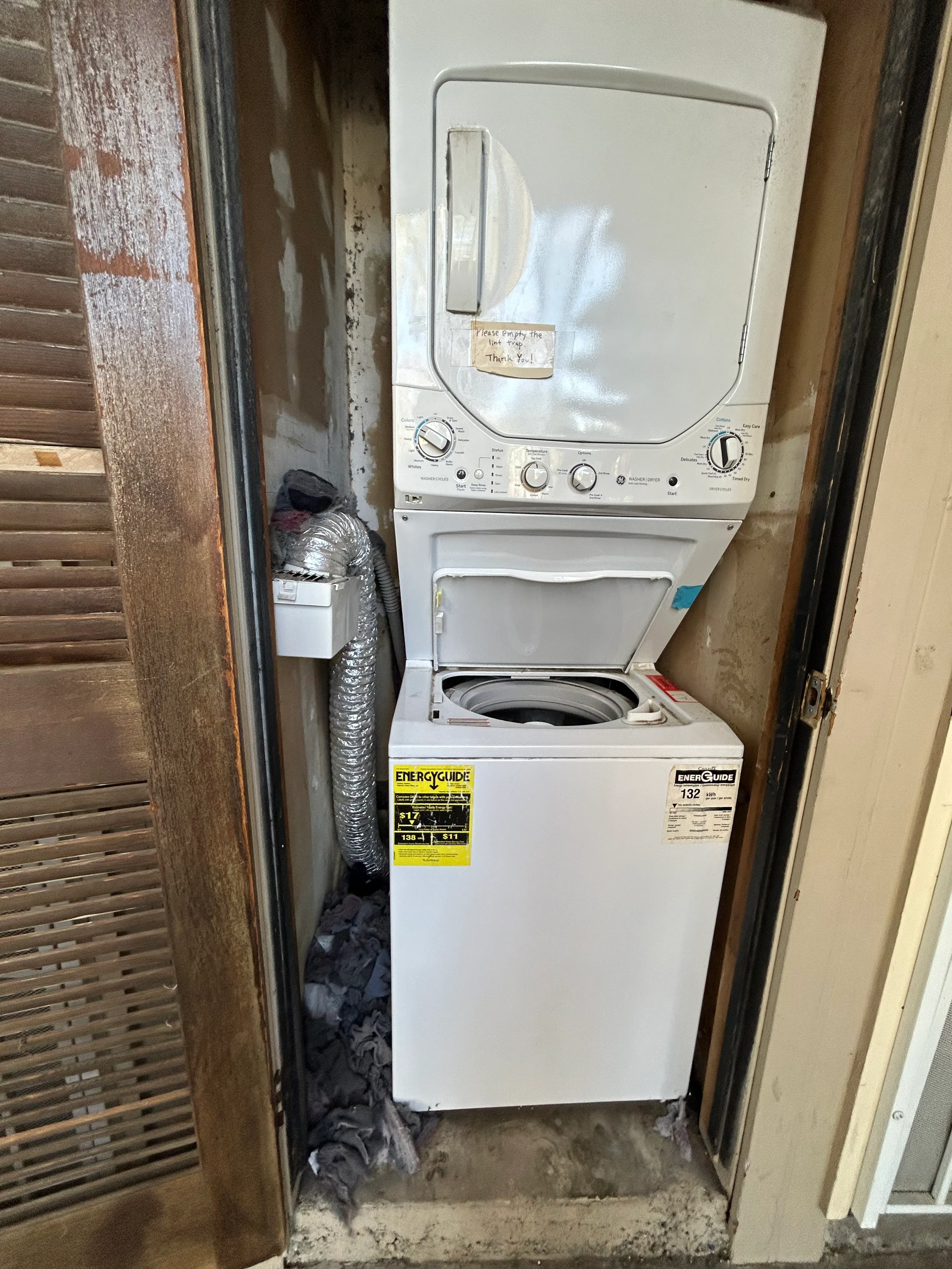
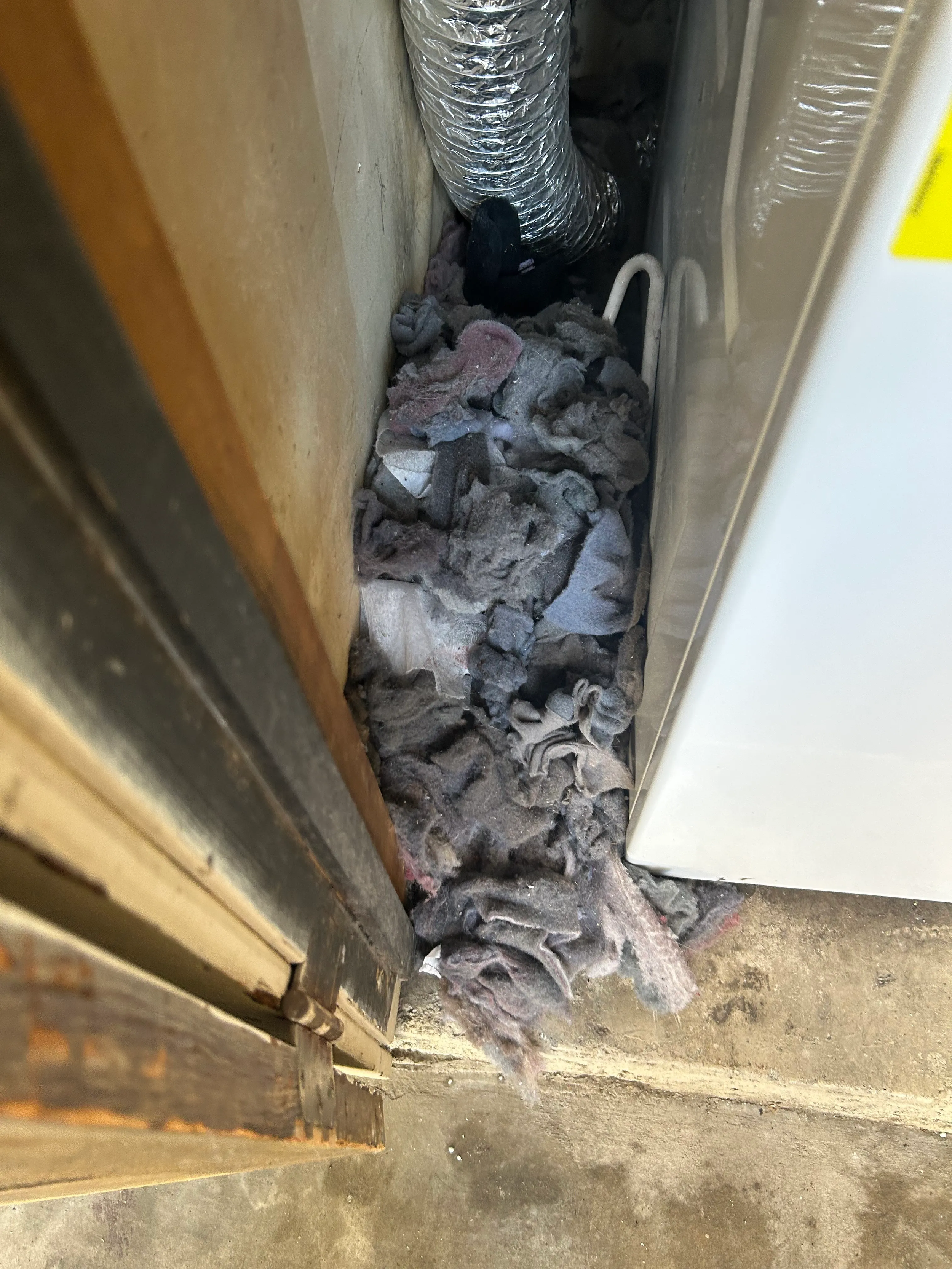
How we fix it: We clear the combustibles, clean out the lint and debris, and reset the space. On the laundry lint issue specifically, we also recommend the property manager send tenants a quick note about keeping the room clear, since it builds back up fast and it's a real fire hazard.
Meter and Breaker Labeling
Utility rooms get flagged when meters and breakers aren't clearly labeled. Responders and utility crews need to know which meter and which breaker serves which unit.
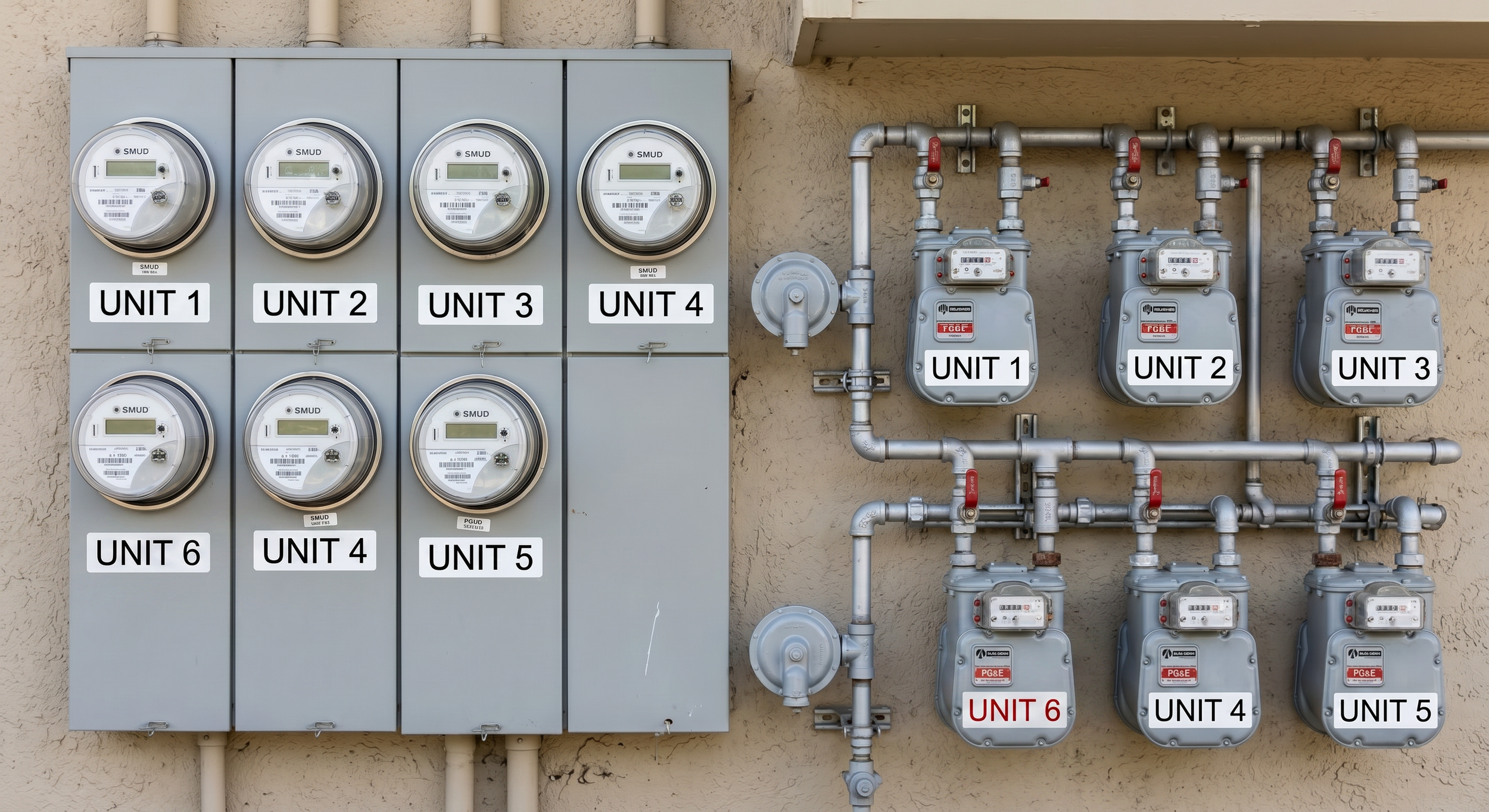
We handled a steady stream of these: labeling gas meters, water meters, and breaker panels, labeling meters under breaker lids, and removing outdated or incorrect unit numbers that no longer matched the building.
How we fix it: We label everything clearly and consistently so the utility room reads at a glance, and we correct any old numbering that's wrong.
Electrical and Exposed Wiring
Exposed or unfinished wiring is both a fire hazard and an insurance problem, and it showed up on several buildings. Related items included running proper wiring in storage areas, adding "Electrical Room" signage, replacing a dryer vent, and closing up ceiling holes in utility rooms.
How we fix it: We correct the wiring, add the required signage, and seal openings. For anything beyond our scope, we flag it clearly and coordinate the right licensed trade rather than leaving it half-done.
Emergency Lights and Exit Signs
In larger buildings, emergency lighting and exit signs get checked for backup power. We've repaired dead emergency lights in hallways and replaced exit signs that had no working battery backup, which is exactly the failure point that matters in a power outage during an emergency.
Structural Egress
Occasionally the flag is the exit path itself. On one building, a back staircase was unsafe and needed immediate repair before it would pass. Egress has to be safe to use, not just present, so these move to the top of the list when they come up.
The Bottom Line for Property Managers
Fire code corrections are rarely one big fix. They're a stack of small, specific items across extinguishers, detectors, labeling, clearances, and wiring, spread across a portfolio of buildings. Chasing all of it is a real time drain.
This is work QuickTurn Maintenance does regularly. We know what Sacramento inspectors look for, we handle the physical corrections and the declaration paperwork together, and we document each fix with photos so you have a clean compliance record.
QuickTurn Maintenance is a licensed contractor (License #1152617), CAA-certified, and AppFolio-fluent, serving property managers throughout Sacramento and the surrounding region. If you've got open fire corrections or inspections on the calendar, reach out and we'll take the list off your hands.
