
How to Save Money Rekeying Locks: Why Smart Property Managers Are Switching to Kwikset SmartKey Deadbolts
Get our ReKey Savings Guide to make sure you’re on the right track for the future.
Rekeying locks after every tenant move-out is a non-negotiable part of property management. But paying a locksmith every single time doesn't have to be. Here's a smarter approach that saves money, speeds up turnovers, and keeps your properties secure.
The Hidden Cost of Traditional Rekeying
If you own multiple rental units, lock rekeying is a line item that shows up after every single move-out. The traditional rekeying process involves removing the lock cylinder and manually re-pinning it to work with a new key. It takes skill, it takes tools, and it typically means calling a locksmith technician every time a tenant moves out.
For one unit, that's manageable. Across a portfolio of 10, 20, or 50 units with regular turnover, the cost adds up fast.
There's a better way.
The Kwikset SmartKey Deadbolt: Rekeying Without a Locksmith
The Kwikset SmartKey KW1 deadbolt is designed specifically to solve this problem. It allows the lock to be rekeyed quickly without removing the cylinder or re-pinning anything by hand. The entire process takes about two minutes and requires no special tools beyond the reset pin that comes in the box.
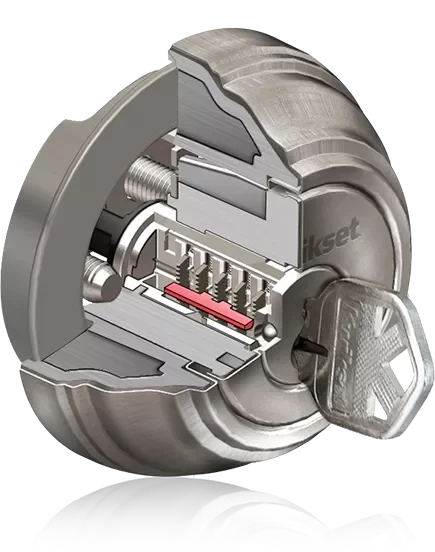
That means property managers, maintenance staff, or even the homeowner can rekey a lock during a routine move-out or move-in inspection without scheduling a locksmith visit.
What Comes in the Box
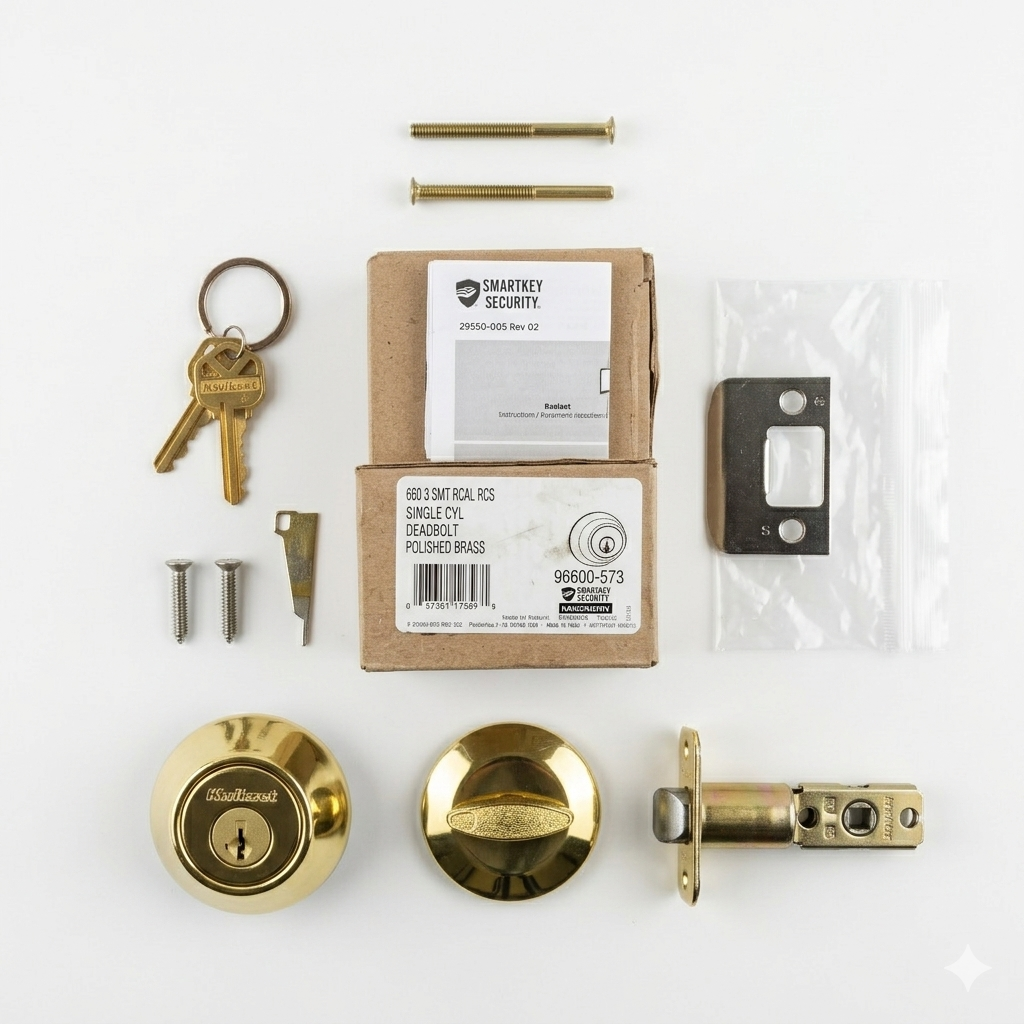
Every Kwikset SmartKey KW1 deadbolt includes everything you need for installation and rekeying right out of the box:
Deadbolt latch
Keyed exterior side of the lock
Interior thumb turn
Strike plate and mounting screws
2 copies of the factory keys
Reset pin/key for rekeying
The reset pin is the key to the whole system. Keep it somewhere safe. As long as you have the reset pin and a working copy of the current key, you can rekey the lock as many times as you need.
How to Rekey a SmartKey Deadbolt
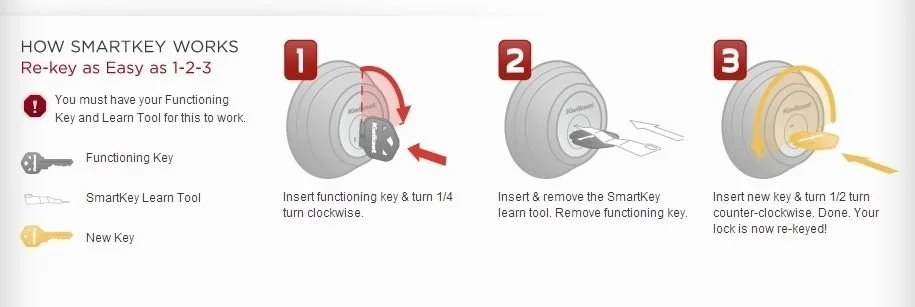
Once the lock is installed on the door, rekeying it is a straightforward process. Here's how it works step by step:
Insert the current key into the lock and turn it to the locked position.
Rotate the key horizontally so the small reset pin hole on the face of the cylinder is visible above the key.
Insert the reset pin into the hole and press firmly until you feel a click.
Remove the current key from the cylinder.
Insert the new KW1 key you want the lock to work with going forward.
Test the new key by locking and unlocking the deadbolt one or two times to confirm it works.
That's it. The lock is now rekeyed to the new key. The old key no longer works.
The reset pin can be reused indefinitely, so these locks can be rekeyed as many times as needed for as long as you own the property.
When to Rekey: Build It Into Your Turnover Inspection
The best time to rekey is during your move-out inspection, before the new tenant takes possession. With a SmartKey deadbolt, this doesn't require scheduling a separate locksmith visit. Your maintenance staff or property manager can rekey the lock on the spot during the walkthrough and hand the new tenant fresh keys at move-in.
This approach tightens up your turnover process and removes a scheduling dependency that can delay move-in dates.
Why This Matters for Security
Rekeying after every tenant move-out isn't just good practice. In California, it's an important part of your duty to provide safe and habitable housing. You have no way of knowing how many copies of the previous tenant's key are floating around after move-out. Friends, family members, former partners, or anyone else the tenant gave a key to could still have access to the unit.
A SmartKey deadbolt makes it easy to eliminate that risk every single time, quickly and at low cost. There's no excuse to skip it.
The Long-Term Math
Let's say you own 10 rental units with an average of one turnover per unit per year. At a typical locksmith rekeying cost of $50 to $100 per lock, that's $500 to $1,000 per year just for lock changes, and that's assuming only one lock per unit.
A Kwikset SmartKey deadbolt retails for around $40 to $60. Once it's installed, every future rekey costs you nothing but two minutes of your maintenance tech's time. Across a portfolio, the payback period on switching is usually less than one year.
Get our ReKey Savings Guide to make sure you’re on the right track for the future.
What Our Clients Say
Property managers who make the switch to SmartKey deadbolts consistently tell us the same thing: they wish they had done it sooner. The convenience of handling rekeying in-house during the turnover inspection, without waiting on a locksmith or paying a service call fee, is one of those small operational changes that has an outsized impact on how smoothly a portfolio runs.
QuickTurn Can Handle the Installation
Switching your rental units over to Kwikset SmartKey deadbolts is a straightforward job, and QuickTurn Maintenance installs them regularly for property managers across the Sacramento area. We can swap out your existing deadbolts, handle the initial setup, and show your team how to handle rekeying going forward.
Ready to simplify your turnover process? Contact us at [email protected] or visit quickturnca.com to get started.
This blog is for general informational purposes. Always verify that your lock hardware meets local building code and lease requirements. QuickTurn Maintenance is a licensed California contractor serving the Sacramento-Roseville-Arden-Arcade region.
